Strategies for Opposing Capital
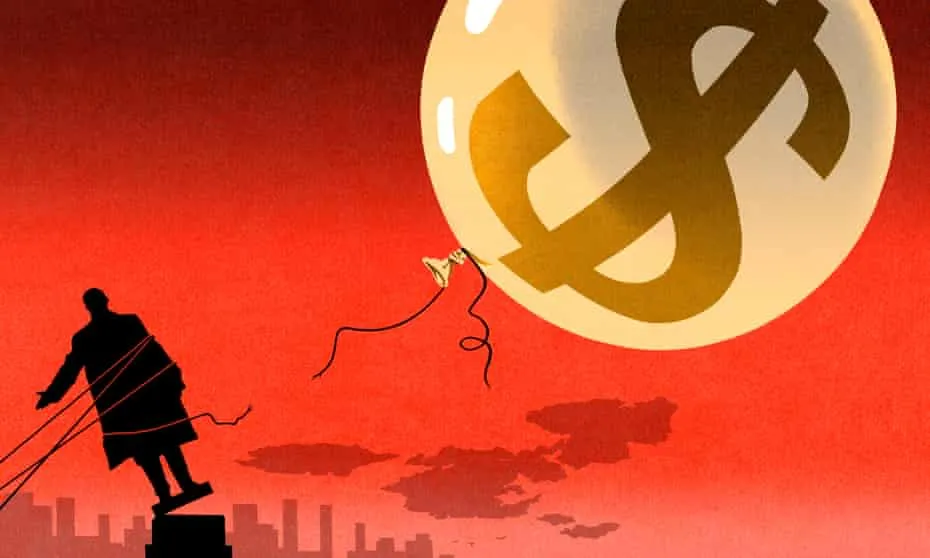
I think a relatively small percentage of people worldwide are strongly ideologically committed to defending capital. That is, I believe in my heart that most people would agree we shouldn’t let corporations and rich people run roughshod over others and the environment with absolute impunity. This being the case, lots of ideas have been explored and implemented to try and limit what capital is allowed to do. Many have failed. In the American political context, in 2021, here are the main ideas I am aware of and what I think their strengths and weaknesses are.
Option 1: Build a rational state on top of capital to manage it. This is liberal regulationism, embodied in things like the EPA and FDA and CFPB.
Option 2: Dissolve capital entirely and start over. This is revolutionism, exemplified in 20th century “communism.”
Option 3: What I would call “unionist competitivism,” i.e. having public institutions that provide recourse for people to be less coerced by capital, e.g. into working as unprotected wage slaves, remaining illiterate unless they can afford private school. This is basically social democracy
Obviously these approaches all have strengths and weaknesses
I think (1) is bad and also what we in America currently have. It is bad because it incorrectly assumes that capital will passively let itself be governed (it won’t), and moreover that governing an uncooperative capital is something that can be done efficiently (it can’t be), and moreover that regulations don’t have downside costs (they do).
I think (2) is bad for several reasons. It is extremely hard to pull off; capital will go to war against it and often win (especially with outside help, see America’s dogged commitment to toppling anti-capitalist movements anywhere they appeared throughout the Cold War). If you do manage to pull it off you can gain some benefits, most prominently reduced socioeconomic inequality. Meanwhile you lose the aesthetic trappings of a “wealthy” society because you have destroyed capital, which in its concentrated form takes on a very sexy and appealing guise (which can distract from broad-based misery at the opposite end of the social hierarchy).
I think (3) is good but has some notable weaknesses. It can lose elections to capital basically half the time. It can also become ossified by corruption and complacency. These two combined have eroded American social democracy over the past 90 years.
Personally, I prefer (3) as the approach that has the best track record of being actually implemented in developed Western countries. I think there are many strategic advantages to it. First, there is a strong human instinct towards fairness. Tiny children and non-human apes and even dogs understand that if you give one individual a treat and not another, that’s not fair, and they get mad. As adults, people want to believe they always have leverage due to their innate worth as people, even if strictly speaking they don’t (very few people are happy to be laid off). And no one likes monopolies because monopolies mean you don’t have a choice which implies coercion. Widespread worker protections (everyone in the union gets decent healthcare and retirement benefits and is protected from arbitrary firing) and public options in services (universal schools and healthcare, see below) appeal to this instinct.
Crucially, capital isn’t stupid and sees all three of these options for the threats that they are. But I think in a democratic context capital has the hardest time fighting back against (3), primarily for the fairness reason stated above. It’s really hard (not impossible, see Prop 22 in California) to persuade people that they should be permitted to be arbitrarily fired or denied benefits. You have to be deep in conservative ideology to believe that, say, public schools are some sort of threat to personal freedom and choice (private schools still exist if that’s what you want to do with your money, and there has been a drive in recent decades towards “school choice” and charter schools, which have problems of their own but demonstrate people’s opposition to perceived monopolies).
In exploring why (3) has this appeal I settled on this idea of “competitivism.” People like to be able to walk away from a bad situation. This is what a lot of people ostensibly like about capitalism. If you’re not satisfied with your landscaper, you can fire them and hire a different one. However this fails if you have a landscape monopoly, as in the gated community where I am currently staying with my uncle’s family. If the landscapers don’t provide enough value for what the residents are paying, the community has to get its act together to fire the landscaper. Management can do this trivially. However if you’re an individual resident you would have to campaign to get all your neighbors to bring your complaint to the attention of management. This is doable but not impossible—it’s a collective action problem.
Apply the same logic to internet service providers. How do you fire Comcast? Ten years ago, if you really wanted high speed internet, firing Comcast wasn’t easy. There was often no competition in your region. Crucially, for instance in my hometown of West Springfield, MA, this has been getting better because competition is being increased via public side intervention, i.e. the creation of a competing local broadband provider.
In my view, politically speaking, building local broadband is much easier than regulating Comcast. Comcast doesn’t want to be regulated. Moreover, regulating Comcast is difficult and, crucially, expensive. They have lawyers, and even if they’re 99% compliant with your regulations you still have to fund the regulator continuously forever. How much money should we be willing to spend suing Comcast twice a decade just to make them comply, when we could invest that money in a local broadband solution that we control entirely and which Comcast now has to self-regulate in order to compete with on price and quality of experience?
I am a proponent of Medicare for All, a policy that very much takes the form of (2) above. I maintain that, if it could be conjured into existence tomorrow by magic, M4A would be very good. But the analysis above helps me think about why the opposition to M4A is so fierce, and so politically effective.
Our current Obamacare regime, which is just regulationism on the pattern of (1) above, suffers the same problems as regulating Comcast—it’s expensive and we can never ever stop propping the regulation regime up, or it will fall apart instantly because no structural change to capital has actually been made. Is this what Republican are talking about when they complain about “big government”?
President Biden has proposed creating a “public option” in healthcare. Proponents argue that the mere existence of the public option would compel private insurers to reorganize in a way that allows them to compete, i.e. self-regulate, no regulator required. I don’t know if this is true but it’s an enticing idea. It’s not perfect, and it would be especially vulnerable to right-wing “starve the beast” electoral attacks. But it would still be a victory over healthcare capital, on the model of (3) above.
Capital is not stupid. Opposition would be fierce, but I believe less fierce than to M4A. Opposition would also be effective, but less so. So this is my way of backing into saying: I might be a self-styled socialist and an advocate of M4A, but I would take the public option over the status quo any day of the week, and hope to see it proposed within Biden’s first term.
Postscript: There is a secret Option 4 for opposing capital, which is: gather together more and different capital, and go smash the first group. This is basically what happens every time the Democrats (intellectual/financial/creative capital) and Republicans (physical/real estate/mineral capital) take turns being in charge of America.